One platform from component lot to 12-year warranty claim. Built on Odoo. Configured for inverter, UPS, solar inverter, and power electronics manufacturers.
Quick Answer
What an Inverter Manufacturing ERP Actually Does
An inverter manufacturing ERP runs production, stock, dealers, service, and finance on one serial-number backbone. Every unit carries a digital history from component lot to warranty claim.
- ✓An inverter manufacturing ERP runs production, stock, dealers, service, and finance on one serial-number backbone.
- ✓Every unit carries a digital history: component lots, test results, dispatch load, dealer, warranty status, service visits.
- ✓It exists because inverters create a 10 to 12 year warranty liability. Warranty and service costs decide the real margin.
- ✓Core modules: stock, multi-location warehouse, supply chain, production, quality, warranty, service network, dealer management, CRM, finance.
- ✓Built for enterprise manufacturers: multi-plant, multi-company, lakhs of serials, national service networks.

Definition
What Is an Inverter Manufacturing ERP?
An inverter manufacturing ERP is a single system that connects procurement, production, testing, warehousing, channel sales, warranty, and after-sales service around one serial number record per unit. Ask it any question about any unit ever made: which component lots went in, which tests it passed, which dealer sold it, and what its warranty owes you or the customer today.
One Database, Every Node
Factory, depots, dealers, service centers, and head office all read and write to the same Odoo database. No exports, no reconciliation cycle.
Serial Number Is the Spine
Lot numbers, test data, invoices, claims, and service visits hang off the serial. It is the primary key of the entire business.
Live Dashboards, Not Spreadsheets
Departments stop reconciling workbooks. Management reads live category, plant, and channel performance the same day.
Built for the Full SKU Range
Home UPS, solar inverters, hybrid PCUs, online UPS, lithium packs, and allied SKUs run on one configured platform.
The Case for Specialisation
Why Do Inverter Manufacturers Need an Industry-Specific ERP?
Because a generic ERP treats a serial number as a label. An inverter business runs on it. Long warranties, multi-tier channels, and a distributed service network create problems that standard trading or manufacturing templates never solve.
Risk 01
The Warranty Tail
Solar inverter warranties commonly run 5 to 12 years. Every unit shipped today is a cost commitment stretching into the late 2030s.
Risk 02
Claim Volume
Even a 2 percent annual failure rate on 5,00,000 field units means 10,000 claims a year. Each one needs validation, parts, a technician, and a settlement.
Risk 03
Component Risk
One weak capacitor or MOSFET lot spreads across thousands of serials. Without lot traceability, a recall is guesswork.
Risk 04
Channel Depth
Distributors, dealers, retailers, electricians, and solar system integrators, each with their own prices, schemes, credit terms, and claims.
Risk 05
Service Spread
Own service centers plus franchise ASCs across states, all holding your spares and carrying your brand reputation.
Risk 06
Seasonality
Summer power cuts and subsidy-driven solar demand compress a year of sales into a few months. Planning errors are expensive.
Risk 07
Margin Pressure
Copper, semiconductor, and freight costs move constantly. Category-wise profitability must be visible monthly, not at year end.
Evaluating platforms? Start with our guide on choosing the right ERP for manufacturing.
Ten Functions, One Database
What Does the ERP Cover, Department by Department?
Ten functions run on one database. Each department gets its own workspace, its own controls, and its own KPIs. Management gets one version of the truth instead of ten reconciled reports.

Module 01
Stock Management
- Serial-tracked finished goods. Batch and lot-tracked components and spares.
- Barcode or QR scan at every receipt, issue, transfer, and dispatch.
- FIFO and FEFO issue rules with aging alerts on stored stock.
- Battery-specific: manufacturing date visibility and recharge-due schedules.
- Min-max and reorder points per item per location.
- Cycle counting with a variance approval workflow.
- Slow-moving and obsolete stock flags with provisioning support.
Achieved
No blind stock, lower working capital, audit-ready inventory records.

Module 02
Multi-Location Warehouse Management
- Plants, CFA depots, regional warehouses, branch godowns, spares hubs, and refurb pool on one system.
- Inter-branch stock transfers with e-way bill and in-transit visibility.
- Putaway and bin rules. Pick, pack, and dispatch with scan confirmation.
- Load-wise dispatch traceability: serials per carton, cartons per vehicle load, load per invoice.
- Transit damage and shortage claims with photo evidence and insurer records.
- GST-compliant depot billing with e-invoice integration.
Achieved
Dispatch accuracy, faster transfers, control over stock diversion.

Module 03
Supply Chain and Procurement
- Multi-level BOMs: PCBA, transformer, enclosure, packing, with approved alternates for scarce semiconductors.
- MRP driven by sales forecast, open orders, and reorder rules.
- Long-lead planning for IGBTs, MOSFETs, DSP controllers, and magnetics.
- Import management: bill of entry, duty, freight, and landed cost per lot.
- Vendor rating on rejection PPM, on-time delivery, and price variance.
- Incoming QC with sampling plans, lot acceptance, and vendor debit notes.
- Subcontracting and job work tracking, including ITC-04 records.
Achieved
Fewer line stoppages, honest landed margins, vendor accountability.

Module 04
Production and Quality
- Work orders by line and shift. Stage-wise routing: SMT, THT, winding, assembly, testing, packing.
- Serial number generation and label printing at the point of birth.
- Component lot capture against each serial at material issue.
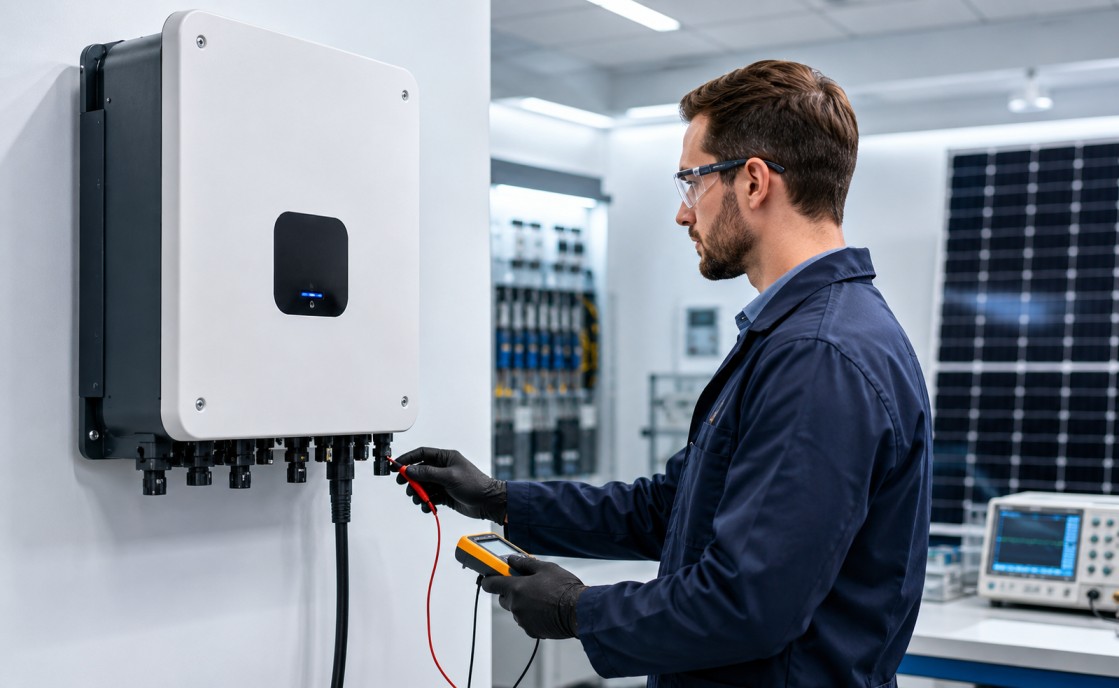
- Test records stored serial-wise: load tests at quarter, half, and full load, surge, hi-pot, burn-in, efficiency, backup time.
- Firmware version recorded per unit.
- First pass yield, rework, and scrap capture with reason codes.
- BIS and IEC test certificate records. Calibration schedules for test equipment.
- 8D and CAPA workflows fed directly by field failure data.
Achieved
Every unit ships with a digital birth record.
Module 05
Warranty Management
- Warranty master per model: duration, flat plus pro-rata split for batteries, inclusions, exclusions.
- Registration by dealer scan, customer QR, or portal at the time of sale.
- Serial-based entitlement check the moment a claim lands.
- Claim adjudication: in-warranty, chargeable, physical damage, tamper flags.
- Warranty inheritance rules on replaced units: balance warranty, not a fresh cycle.
- Extended warranty and AMC products with renewal reminders.
- Back-to-back warranty recovery from component vendors with lot evidence.
- Duplicate serial and fraud claim detection.
Achieved
Warranty stops being a black hole.
Module 06
Service Management
- Complaint intake from call center, WhatsApp, dealer, portal, or IoT alert.
- Auto-assignment by pincode to a field engineer or franchise service center.
- SLA timers on response time, resolution time, and first-visit fix.
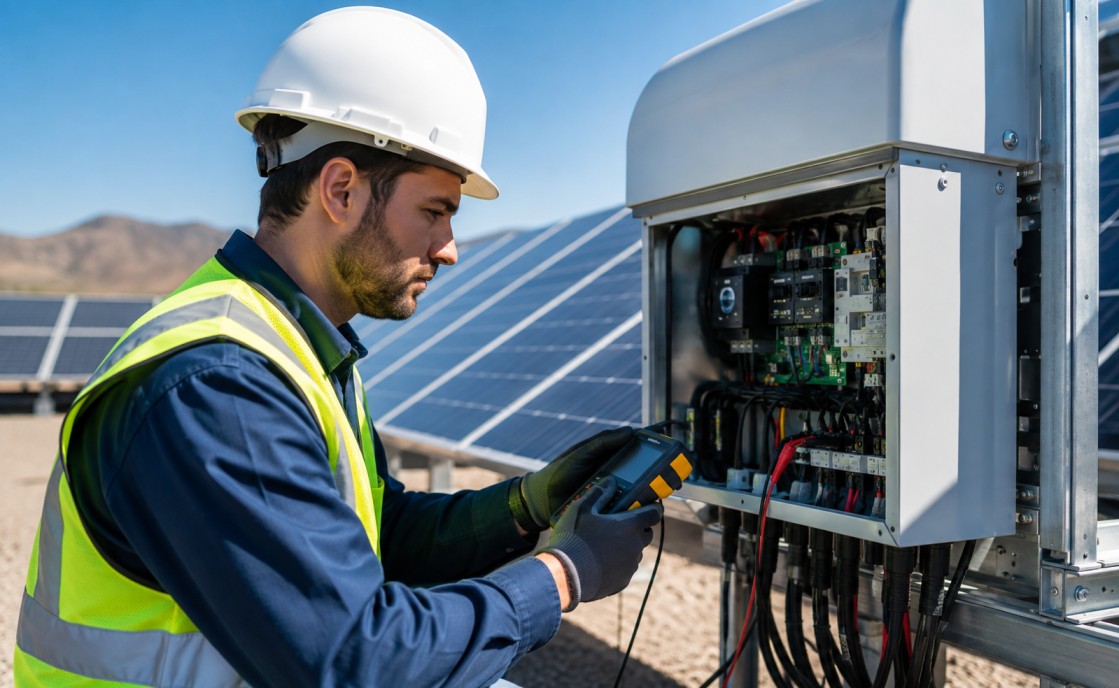
- Technician mobile app: job list, check-in, spares consumed, photos, OTP-based closure, payment collection for out-of-warranty work.
- Installation and commissioning jobs for solar inverters with site checklists.
- AMC contracts and preventive maintenance schedules for institutional customers.
Achieved
Measured service, not remembered service. CSAT and NPS per ticket.
Module 07
Service Network Management
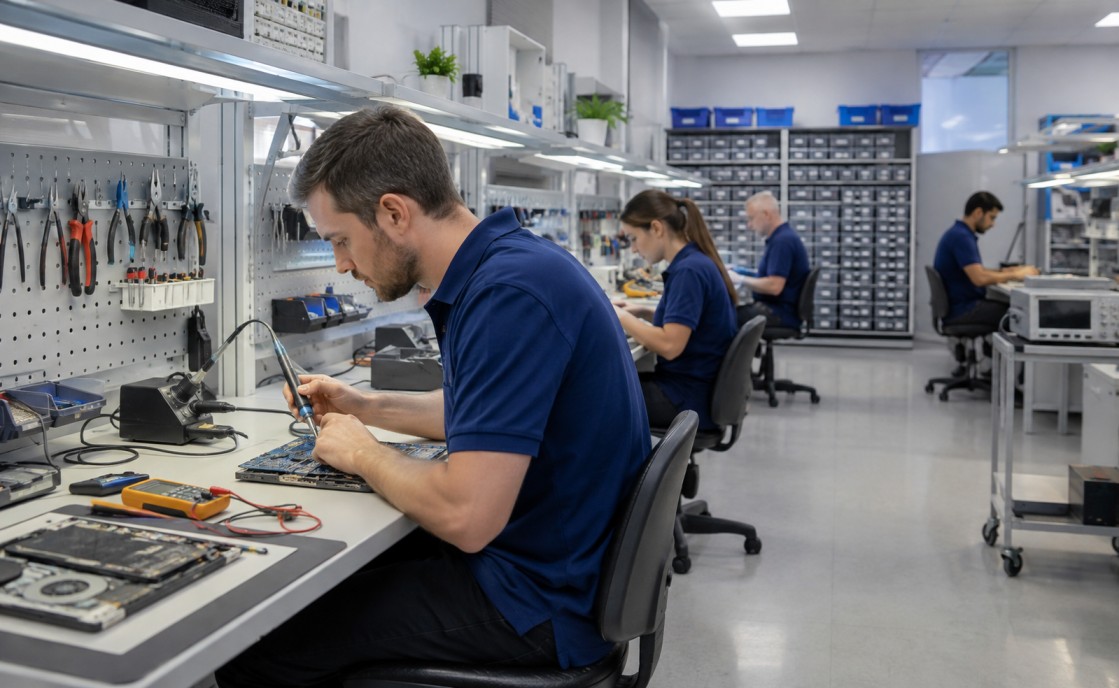
- Franchise ASC onboarding, agreements, and territory mapping.
- Spares at ASCs: consignment stock, van stock, min-max replenishment.
- Defective return discipline: one-for-one replacement against returned parts.
- ASC claim settlement: per-visit rates, spare reimbursement, penalties and incentives.
- Warranty spare consumption audit by center.
- Network coverage analysis: pincodes served, TAT by geography, capacity gaps.
Achieved
A national network run from one dashboard, settled without disputes.

Module 08
Dealer and Channel Partner Management
- Tiered, region-wise price lists for distributors, dealers, and system integrators.
- Credit limits, security deposits, and automatic overdue blocks.
- Scheme engine: target incentives, turnover discounts, seasonal offers, auto-computed settlements.
- Dealer portal: place orders, check stock and schemes, track dispatches, download ledgers, register warranties, file claims.
- Secondary sales capture and channel inventory visibility.
- Electrician and retailer loyalty programs on QR scan points.
- Price protection, damage, and transit claims settled through credit notes.
- Field sales app: beat plans, dealer visits, order booking, collections.
Achieved
Fewer channel disputes, lower DSO, scheme spend with measured ROI.

Module 09
CRM and Enterprise Sales
- Lead capture from website, marketplaces, exhibitions, and dealer referrals.
- Separate pipelines: OEM supply, institutional and tender business, solar EPC projects, exports, channel expansion.
- Quotations with technical datasheets and a price approval matrix.
- Service-to-sales triggers: battery replacement due, extended warranty upsell, AMC renewal.
- Win-loss analysis by category and region.
Achieved
Forecast by category, pipeline discipline.

Module 10
Finance, Costing, and Profitability
- Category-wise P&L: home UPS, solar inverter, battery, lithium, spares, AMC.
- Department-wise and cost-center P&L: manufacturing, service, channel, corporate.
- Model-wise contribution margin including landed cost and warranty provision.
- Dealer-wise and region-wise profitability.
- Warranty provision accounting: per-unit accrual, provision vs actual variance.
- Scheme cost as a percentage of revenue by channel.
- GST, e-invoice, e-way bill, TDS and TCS compliance. Multi-currency for exports.
- Working capital tracking: inventory days, receivable days, payable days.
Achieved
You know which category funds the business and which quietly loses money.
Related reading: supply chain ERP for solar and renewable energy companies, our Odoo CRM services, and why a solar business needs a sales ERP.
Lot to Serial to Service
How Does Lot-Wise and Serial Number Traceability Work?
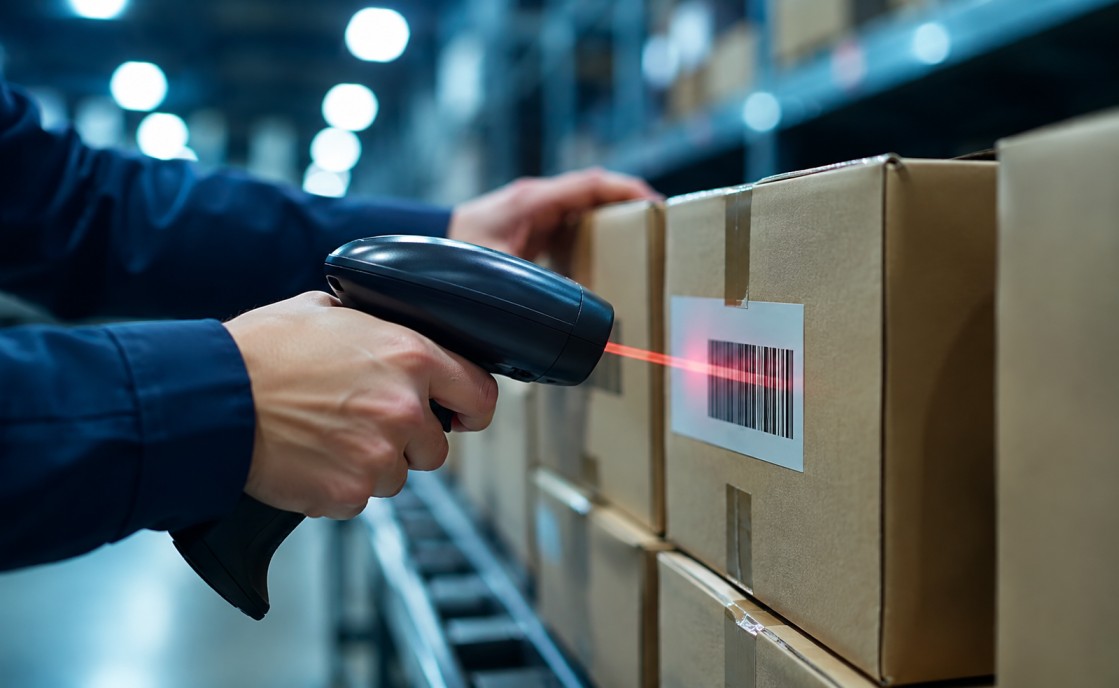
Traceability links every supplier lot to every finished serial, and every serial to its dealer, customer, and service history. Forward, it answers where did this lot go. Backward, it answers what is inside this unit. Both answers arrive in minutes, not weeks.
Control 01
Recall Control
A capacitor lot fails in the field. The system lists every affected serial, its current location or owner, and its dealer in one query.
Control 02
Failure Analytics
Failure rate computed by component lot, vendor, model, production line, and month of manufacture.
Control 03
Vendor Recovery
Lot-level evidence turns field failures into vendor debit notes instead of absorbed cost.
Control 04
Claim Verification
Serial, invoice, and registration cross-check kills fake and duplicate claims before settlement.
Control 05
Load-Wise Dispatch Detail
Every vehicle load maps serials to invoice, transporter, and destination. Transit claims and diversion checks become factual instead of adversarial.
The Hidden Cost Centre
How Does the ERP Protect Margins on 10 to 12 Year Warranties?
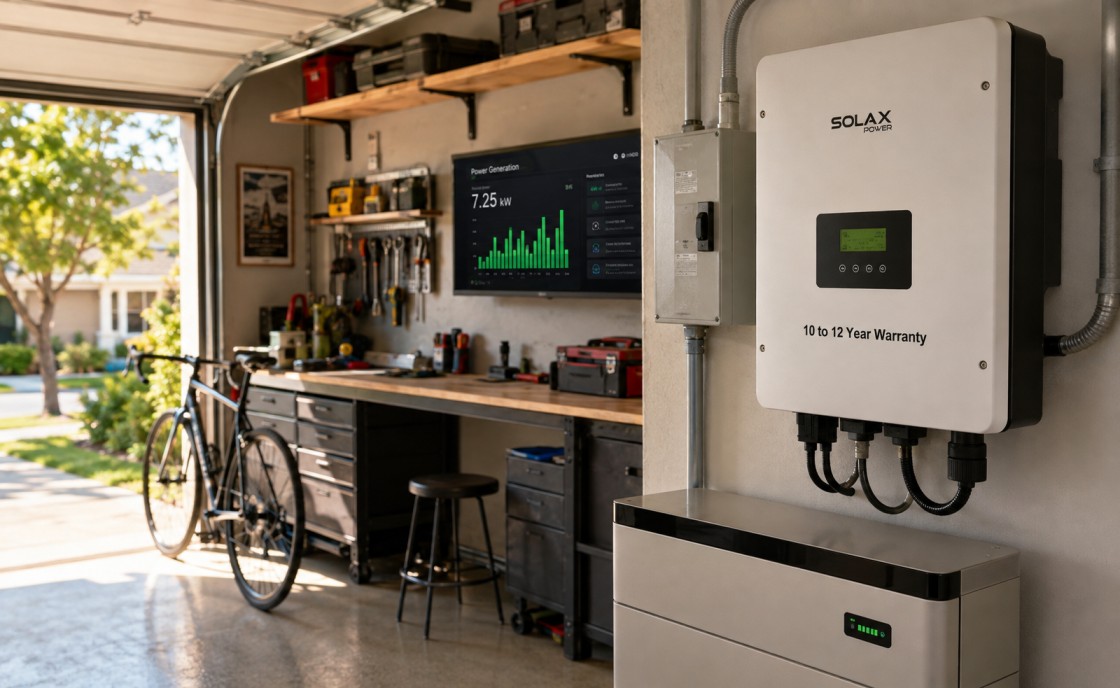
Long warranties are the industry’s biggest hidden cost. The ERP controls them at four points: entitlement, execution, recovery, and provisioning. Each point either blocks a false cost or recovers a real one.
Why This Matters
A 10 to 12 year warranty means a unit sold in 2026 can raise a claim in 2038. Without a system, entitlement checks depend on paper bills, replaced units get fresh warranties by mistake, refurbished stock leaks into fresh channels, and finance discovers the cost only in the audit. Warranty leakage compounds silently and eats the profit the sale earned.
Point 01
Entitlement
Claims validated against serial, sale date, registration, and exclusions before a single rupee is spent.
Point 02
Execution
Repair vs replace decided by cost rules. Spares issued against the claim, defectives recovered one-for-one.
Point 03
Recovery
Component failures claimed back from vendors. Out-of-warranty work invoiced, not gifted.
Point 04
Refurb Pool
Returned units inspected, graded, re-certified, and reissued as service replacements. Tracked separately from fresh stock.
Point 05
Provisioning
Per-unit warranty accrual by category. Monthly provision vs actual variance for the CFO and auditors.
Point 06
Pricing Feedback
True warranty cost per model flows back into pricing and design decisions for the next product cycle.
A Controlled Loop
How Does Replacement Service Management Work?
Replacement is a controlled loop, not a giveaway. The ERP tracks the defective unit out of the field, the replacement into it, and the warranty terms that travel between them.
- ✓DOA workflow with dealer verification and time-bound approval.
- ✓Advance replacement with security or charge rules for priority customers.
- ✓Standby unit issue and recovery for institutional and solar plant customers.
- ✓Reverse logistics: defective pickup, gate entry at repair factory, repair or scrap disposition.
- ✓Balance warranty inheritance on the replacement unit.
- ✓Refurb grading and re-certification tests before any reissue.
- ✓Customer status updates on SMS and WhatsApp at each stage.
Achieved
Replacement TAT drops, refurb value is recovered, and replaced units never leak back into the fresh sales channel.
Measured, Not Assembled
Which KPIs Should an Inverter Manufacturer Track?
Track a short list per department, reviewed monthly, computed by the system instead of assembled in spreadsheets. These are the KPIs enterprise inverter manufacturers run on.
| Department | KPIs the ERP Computes |
|---|---|
| Production | First pass yield, test yield, OEE, rework percentage, scrap percentage, schedule adherence, output per line per shift |
| Quality | Incoming rejection PPM, field failure rate per 1,000 units, DOA percentage, mean time between failures, CAPA closure days |
| Stock and SCM | Inventory turns, days of inventory, stockout percentage, supplier on-time delivery, forecast accuracy, excess and obsolete percentage, transfer TAT |
| Warranty and Service | Warranty cost as percentage of net sales, claim TAT, first-visit fix rate, repeat repair percentage, claim rejection percentage, refurb recovery rate, spare fill rate, NPS and CSAT |
| Channel | Secondary sales growth, active dealer percentage, channel inventory weeks, DSO, scheme cost percentage, order fill rate |
| Finance | Category-wise contribution margin, department-wise EBITDA, warranty provision vs actual variance, working capital days |
Outcomes
What Results Can an Inverter Manufacturer Expect?
These are the operational outcomes an inverter manufacturing ERP delivers once production, channel, service, and finance run on the same serial-number backbone.

One Serial-Number Truth
A single version of every unit across factory, depots, dealers, and service centers.
Recall Answered in Minutes
Lot-to-serial mapping turns recall exposure into a filtered report, not a fire drill.
🛡️
Warranty Leakage Blocked
Controlled at entitlement, execution, recovery, and provisioning.
Monthly Category P&L
Category-wise and department-wise profit available without spreadsheet marathons.
Service Settled on Data
Visits, spares, SLAs, and reimbursements settled from records, not arguments.
Schemes Without Disputes
Channel schemes computed automatically and settled against a shared ledger.
Working Capital Visibility
Stock aging, receivables, and channel inventory in one view.
Complete Audit Trail
Every claim, credit note, and stock movement carries its own history.
Delivery Partner
Why Tatvamasi Labs for Inverter Manufacturing ERP?
Tatvamasi Labs builds inverter manufacturing ERP on Odoo and has delivered it for inverter and solar businesses. 100+ Odoo implementations across 15+ industries. Teams in Surat, Pune, and Bangalore, with presence in Belgium and the USA. Startups to enterprises.
Proven in This Industry
Read the Qbits solar inverter ERP case study for a live deployment in inverter manufacturing.
Manufacturing Depth
See the TBEEX manufacturing ERP case study for multi-stage production and quality control.
Solar Ecosystem Coverage
Full-stack experience across solar industry ERP solutions and Odoo ERP for solar EPC.
Enterprise Delivery
Phased rollout, master data migration, role-based access, user training, and post go-live support through our Odoo implementation services.
Fit to Your Process
Odoo customization for warranty rules, scheme engines, and test station capture.
Connected Stack
Odoo integration services for IoT monitoring, e-invoice, WhatsApp, and payment systems.
FAQ
Inverter Manufacturing ERP Questions, Answered Directly
It is a single system that manages procurement, production, testing, inventory, dealers, warranty, and service for inverter manufacturers, built around one serial number record per unit. Every department works on the same data, so traceability, claims, and profitability reports come from one source.
The right ERP must handle serial and lot traceability, long warranty cycles, franchise service networks, and multi-tier dealer channels without heavy per-user costs. Odoo, configured for inverter manufacturing, covers these on one platform. Evaluate any option against those four capabilities first.
It stores warranty terms per model, registers each serial at sale, validates every claim against entitlement, applies balance-warranty rules on replacements, recovers component failures from vendors, and books per-unit warranty provisions. Finance sees provision vs actual variance monthly, so warranty cost never surprises the P&L.
Yes. Component lots are scanned at material issue and linked to each finished serial. When a lot problem surfaces, the system lists every affected serial with its current dealer, customer, or warehouse location, which turns a recall from guesswork into a filtered report.
DOA claims follow a verified, time-bound workflow. Replacements carry the balance warranty of the original unit, not a fresh cycle. Defectives return through reverse logistics for repair or refurbishment, and refurbished units are graded, re-certified, and tracked separately from fresh stock.
Yes. Dealers get a portal for orders, stock, ledgers, warranty registration, and claims. Franchise service centers get assigned tickets, consignment spares, and automated claim settlements. Both work on controlled access to the same database, so settlements need no reconciliation.
Yes. Inverter telemetry from monitoring apps or datalogger devices can flow into the ERP through APIs. Fault alerts create service tickets automatically, and technicians see live parameters before a site visit, which raises first-visit fix rates and cuts unnecessary travel.
Most manufacturers go live in phases. Core stock, purchase, production, and accounting typically take 12 to 16 weeks. Warranty, service network, and dealer portals follow in later phases. See our note on Odoo implementation timelines for how scope drives the calendar.
Proof
Solar Inverter ERP Case Studies and Client Results

An inverter manufacturer operating across seven cities connected procurement, order fulfilment, warranty and O&M in one system.

A rooftop and industrial EPC company running in-house execution, channel partners and trading moved onto one system covering sales, design, execution and accounts.

A renewable energy startup set up ERP foundations for finance, inventory and integration ahead of scale.
Plan Your Inverter Manufacturing ERP
Bring your warranty terms, channel structure, and service network map. We will show the system running on your scenarios, not on a generic demo database.