
Case Study

From Planning on a Whiteboard to 2× Output: The LD Texsol Odoo MRP Story

Odoo Partner - LD Texsol
🧵 Premium Jacquard Machinery  ·  Since Est.
Client Profile

LD Texsol

IndustryJacquard Machinery Manufacturing
ProductPremium Jacquard Weaving Machines & Components
LocationIndia
Team Size50+ employees
MarketsIndia (domestic) & South America (export)
ModulesOdoo MRP, ERP & Finance

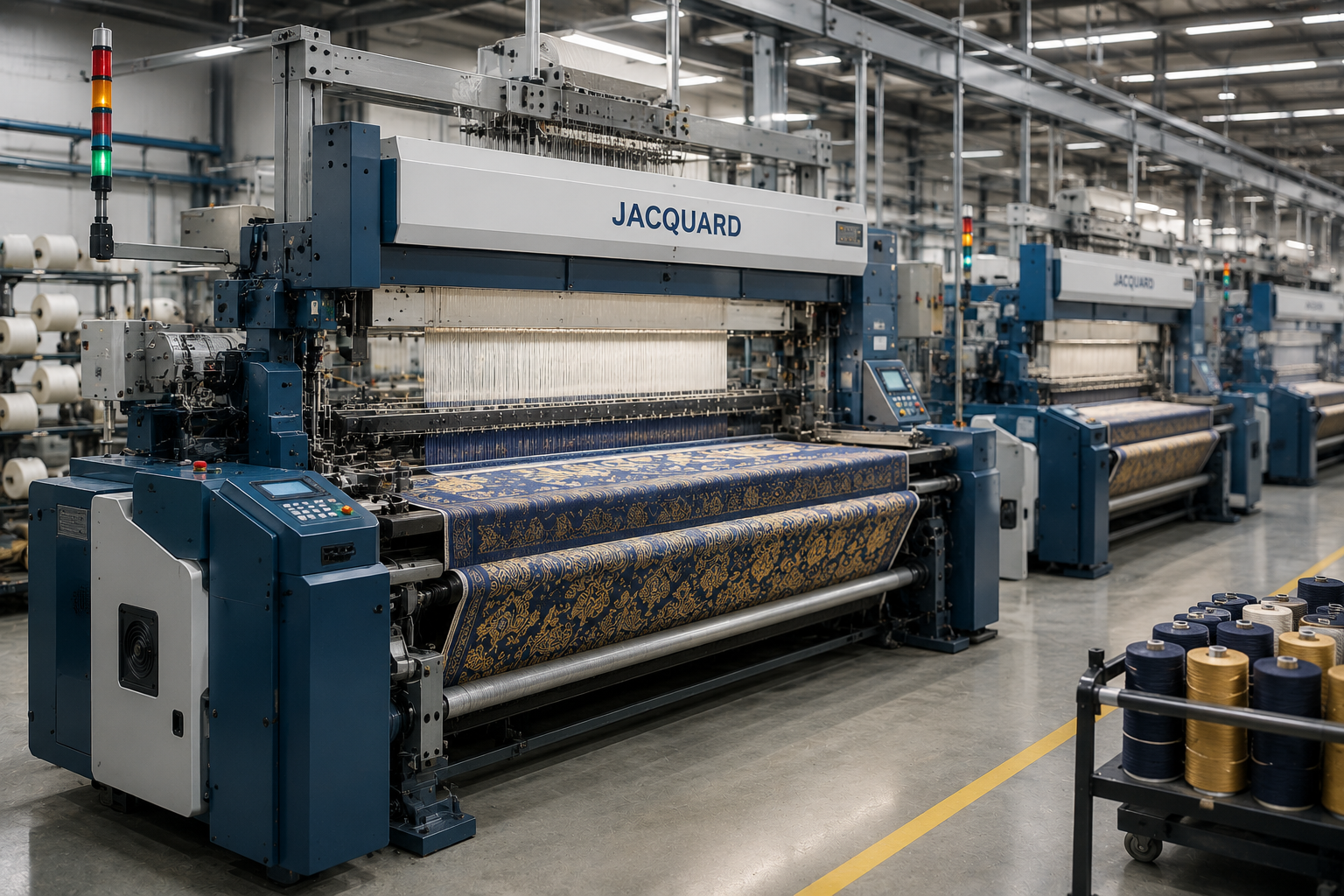
LD Texsol is a premium jacquard machinery manufacturer trusted by textile mills across India and South America. Their machines are precision-engineered, complex to assemble, and built to last, the kind of product where quality isn't negotiable and delivery timelines matter enormously to buyers whose entire weaving operations depend on them.

But behind the premium product was a manufacturing operation held together by informal systems. Material shortages were stopping production lines mid-run. Warehouse space was being wasted while critical components were on backorder. And planning was done on instinct, not data, meaning the factory's true capacity was never actually being used.

The result of implementing Odoo MRP & ERP was as direct as it was dramatic: production capacity doubled, not by adding a single machine or expanding the factory floor, but purely through better planning and warehouse utilisation.

Production Capacity
Same floor, same team
Zero
Production Stoppages
Due to material shortage
40%
Reduction in Excess Inventory
Working capital freed
30%
Faster Order Fulfilment
Procurement to dispatch
The Challenge

The Hidden Cost of Running a Precision Manufacturer Without Planning Systems

In jacquard machinery manufacturing, every component matters. When one part is missing, the whole assembly stops, and the cost of that stoppage is rarely measured.

Procurement
Running short of material repeatedly
Production lines were stopping mid-assembly because critical components — precision gears, electronic cards, needles, hooks — ran out without warning. Procurement was reactive. Someone noticed the shortage, raised an emergency order, and the factory waited. This happened regularly, and the true cost in lost production hours was never calculated.
Warehouse
Warehouse space misused while shortages persisted
The same warehouse holding critical components in shortage was simultaneously overstocked with slow-moving parts and obsolete materials that had been sitting untouched for months. Without a live inventory system, the store team had no way to distinguish fast-moving from slow-moving stock, and space was consumed by the wrong things.
Planning
No advance production planning, scheduling by memory
Production schedules were maintained informally, often in the production manager's head or on a whiteboard. There was no system linking confirmed sales orders to production workloads, no advance material requirement calculation, and no way to see whether the factory was overbooked or underutilised at any point in the coming weeks.
BOM & Routing
No structured Bill of Materials per machine variant
Jacquard machines come in multiple configurations (hook count, electronic vs. mechanical, single or double lift). Without a formalised BOM per variant in the system, the procurement team couldn't accurately forecast what materials each confirmed order would require. Every new order was a manual exercise in component listing, error-prone and time-consuming.
Finance
No visibility into production cost per machine
What did it actually cost to build one unit of each machine variant, including materials, labour hours, and overhead absorption? Nobody knew with precision. Pricing was based on rough estimates, and margin visibility per order was non-existent. Profitable and loss-making orders looked the same on the surface.
Export
South America orders with no structured fulfilment tracking
Export orders to South American buyers, larger, more complex, and with longer lead times, were managed the same way as domestic orders: informally. No structured production allocation for export orders, no lead time buffer for international logistics, and no proactive communication to buyers on dispatch timelines.
The Solution

Odoo MRP & ERP for a Precision Manufacturer

The same factory. The same team. The same floor space. Twice the output, because the planning finally matched the production capability that was always there.

🔩
Bill of Materials for Every Machine Variant
Before anything else could be fixed, LD Texsol needed a clean, formalised Bill of Materials (BOM) for every jacquard machine variant in their product range. The Odoo implementation began by digitising every BOM, including hook counts, electronic card configurations, and mechanical vs. electronic lift variants, into the system. From this point forward, every confirmed sales order automatically generated an accurate material requirement list. The guesswork was eliminated at the source.
📅
Material Requirements Planning
With BOMs in place, Odoo MRP runs a rolling material requirements plan against the confirmed order book and production schedule. The system calculates what components are needed, when they're needed, and what's already in stock, then automatically generates purchase requisitions for the shortfall with appropriate lead time buffers built in. The production team now knows weeks in advance what will be needed. Emergency procurement orders and the production stoppages they caused have been eliminated entirely.
🏭
Production Scheduling Linked to Sales Orders
Every confirmed sales order, whether domestic or export, now triggers a production work order in Odoo, linked to the specific machine variant's BOM, routing, and estimated assembly time. The production schedule is visible to management and the shop floor in real time: what's being assembled today, what's queued for next week, and what the capacity utilisation looks like through the next 30 days. Overbooking and underutilisation are both visible, and both are now actively managed.
📦
Warehouse Reorganisation Driven by Live Inventory Data
The Odoo Inventory module gave LD Texsol's store team something they had never had: a live, accurate picture of what was in the warehouse, where it was located, and how fast it was moving. Slow-moving and obsolete stock was identified and cleared, freeing up 40% of previously occupied shelf space. Fast-moving components were moved to accessible locations and set with reorder points that trigger automatic purchase requisitions before they run out. The warehouse went from a source of production delays to a production enabler.
💰
Production Cost Tracking Per Machine Variant
The Odoo Finance module was configured to absorb actual material costs, labour hours, and manufacturing overhead against each production work order, giving management a true cost-per-unit for every machine variant produced. For the first time, LD Texsol could see their actual margin per order. This visibility immediately highlighted two variants that were being sold below true cost, and informed a pricing correction that improved gross margin without losing a single customer.
🌍
Export Order Management with Lead Time Buffers
South American export orders are structurally different from domestic orders, with longer lead times, containerised shipping, customs documentation, and buyers who plan their own production schedules around delivery commitments. The Odoo implementation added export-specific lead time buffers into the production planning rules, ensuring export orders are scheduled and procured ahead of domestic orders of equivalent size. Buyers in South America now receive proactive dispatch notifications and have not experienced a single missed delivery since go-live.

⚡ How Production Capacity Doubled Without a Single New Machine

The factory always had the capacity. What it lacked was the planning to use it. With Odoo MRP, production stoppages from material shortages were eliminated, idle assembly time between jobs was reduced, and the shop floor ran at consistent utilisation for the first time.

🔄
Elimination of Stoppages
Zero production halts due to material shortage post go-live
📋
Advance Planning
4-week forward production & procurement visibility
📦
Warehouse Efficiency
40% reduction in excess stock; fast-movers always available
⚙️
Shop Floor Utilisation
Consistent high utilisation replacing boom-and-stop cycles
The Results

What Changed Across Production, Procurement & Finance

"We always believed our machines were among the best in the market. What we didn't realise was how much output we were leaving on the table every month simply because we didn't know what was in our warehouse or what we needed to order next. Odoo showed us the gap between what we were producing and what we were capable of, and then helped us close it. Doubling our capacity without adding a single new machine is something we wouldn't have believed possible before this."
Production
Overall Production Capacity
Factory running at ~50% effective capacity due to stoppages and idle time
↑ 2× output — same floor, same team, same machines
Procurement
Material Shortage Stoppages
Regular production halts, discovered reactively, resolved with emergency orders
Zero stoppages due to material shortage since go-live
Warehouse
Excess Inventory
Slow-moving & obsolete stock consuming 40% of warehouse capacity
↓ 40% reduction — working capital freed and redeployed
Order Fulfilment
Procurement to Dispatch Time
Unpredictable, dependent on when shortages were discovered
↓ 30% faster — planned procurement, no reactive delays
Finance
Cost Per Machine Variant
Unknown, pricing based on rough estimates, margin invisible
Actual cost-per-unit tracked; pricing corrected on 2 variants
Export
South America Delivery Reliability
No export-specific planning, treated same as domestic orders
100% on-time delivery since export lead time buffers implemented
What Was Implemented

Odoo Modules at LD Texsol

Odoo MRP
BOM per variant, material requirements planning, production work orders, scheduling
Odoo Inventory
Live stock levels, reorder points, slow-moving identification, warehouse organisation
Odoo Purchase
Auto-generated purchase requisitions, vendor management, lead time tracking
Odoo Sales
Order-to-production linkage, export order management, delivery scheduling
Odoo Finance & Accounting
Production cost per unit, margin per order, overhead absorption, P&L reporting
Production Planning Dashboard
4-week forward visibility, capacity utilisation, material readiness per work order
The Bigger Picture

Why Machinery Manufacturers Lose Output to Planning, Not Capacity

In precision machinery manufacturing, the bottleneck is almost never the machines. It's the planning. A well-equipped factory running on informal systems will consistently underperform a less-equipped factory running on structured MRP. The difference is entirely in how accurately demand is translated into procurement, and how efficiently the warehouse supports uninterrupted production flow.

LD Texsol's story is a textbook example of hidden capacity. The factory was capable of twice its output from day one, but it couldn't achieve that output because material shortages kept stopping the line, and warehouse clutter kept the right components out of reach at the wrong moments. No capital expenditure was required. No new headcount. No factory expansion. Just a structured ERP for manufacturers that connected the sales order book to the production floor and the production floor to the warehouse.

For machinery manufacturers in India serving domestic and export markets, the calculus is straightforward: before investing in additional capacity, ensure the capacity you already have is being fully utilised. In most cases, as LD Texsol discovered, Odoo MRP implemented with the right BOMs and planning parameters will unlock more output than a new machine line ever could. And at a fraction of the cost.

Built for machinery manufacturers

Your factory has more capacity than you think. Let's find it.

If your production line stops waiting for materials, your warehouse is full of the wrong things, and your planning lives on a whiteboard, Odoo MRP was built to fix exactly this. Let's talk.
author-avatar

About Pratik Akbari

Pratik Akbari is an Odoo ERP expert and content writer specializing in Odoo implementation, customization, integration, and business automation solutions. He shares valuable insights, practical guides, and industry updates to help businesses optimize their operations with Odoo.